
En
A pan mill, also known as a wet grinding pan mill, is a device composed of a rotating grinding pan and a stationary grinding pan, mainly used for grinding and processing materials such as colored metals, ferrous metals, non-metallic minerals, etc.
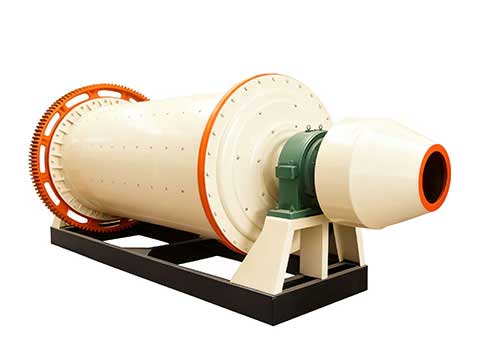
A ball mill is a device that uses steel balls as abrasives and grinds materials into the desired particle size through a rotating cylinder. It is widely used in grinding processes in industries such as cement, silicate, and ceramics.
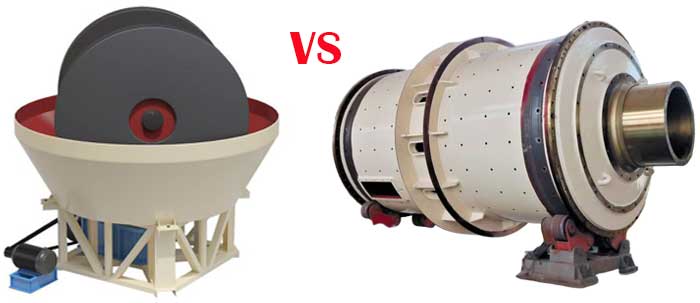
The differences between pan mill and ball mill are as follows:
A pan mill uses one or more high-speed rotating metal pan(grinding pan) to rub, grind, and shear the slurry, resulting in fiber separation and material refinement. The slurry is discharged from the edge of the grinding pan under centrifugal force, suitable for continuous pulping operation.
The ball mill relies on the impact and grinding effect of steel balls (grinding medium) inside the cylinder to crush materials. When the material is lifted to a certain height during the rotation of the cylinder, it falls down and crushes the particles through the impact force. At the same time, the sliding between the steel balls produces a grinding effect, which is suitable for dry or wet grinding.
The pan mill is mainly composed of a cast iron casing, grinding pans(moving pan and fixed pan), transmission system, and hydraulic pressure device. The surface of the grinding pan is engraved with knife patterns, with adjustable gaps, and supports multiple units to be used in series to improve efficiency.
The core component of the ball mill is a cylindrical body, which is filled with steel balls and lining plates, and fed and discharged through a hollow journal. The structure includes feeding section, rotating section, transmission section (such as motor and gear), etc. The cylinder can be installed horizontally or obliquely.
Pan mills are mainly used in the pulping process of the paper industry, such as the beating treatment of chemical pulp, mechanical pulp, or waste pulp, and are suitable for the fine processing of fibrous materials. In recent years, it has also expanded to high concentration pulping (concentration can reach 20% -35%) and energy-saving grinding.
Ball mills are more widely used, covering industries such as cement production, ore beneficiation, ceramics, and chemical engineering. They are used for grinding various ores, rocks, or raw materials and have strong adaptability.
The energy cost of pan mill is high, but through technological improvements such as hydraulic regulation and reverse rotation design, the power cost can be reduced by 50% -60%. The advantage lies in stable beating quality and high precision of gap sensors (up to 0.01 millimeters), suitable for high concentration operations.
The ball mill consumes a lot of energy, but efficiency can be improved by optimizing the steel ball grading (such as the two grading ball method) and energy-saving design (such as automatic self-aligning bearings). The advantage is that it has a large processing capacity and is suitable for multi-stage operations from coarse grinding to fine grinding.