
En
Talc is a hydrothermal alteration mineral with low hardness, high melting point, and strong adsorption capacity. It is widely used in industrial fields such as chemical, building materials, water conservancy, and environmental protection. Grinding talc into powder can greatly improve its comprehensive utilization rate.
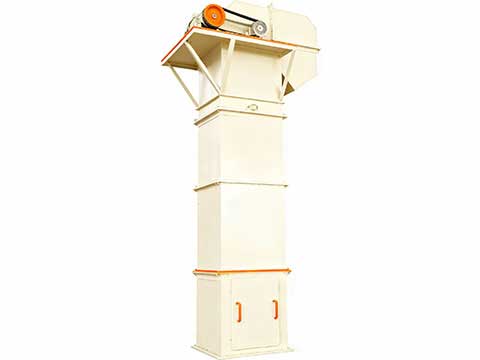
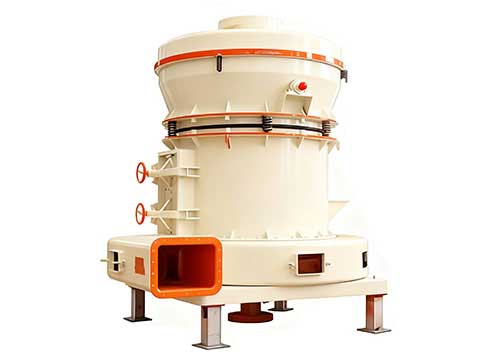
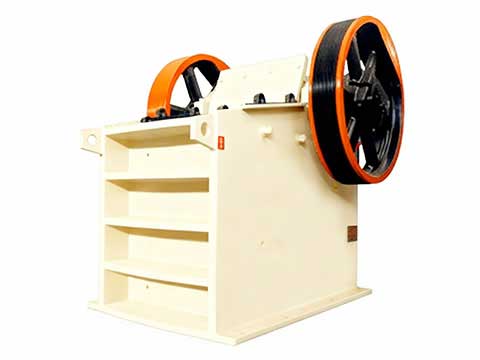
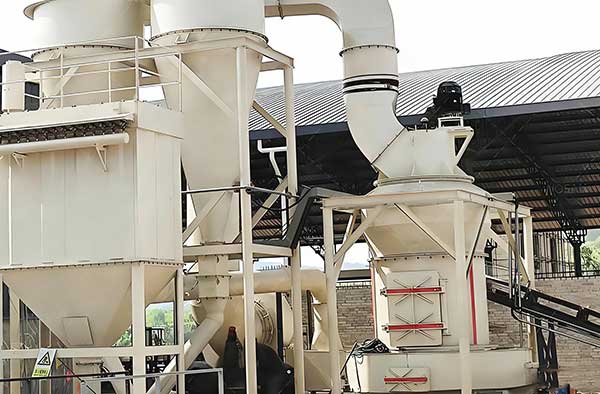
The talc grinding production line mainly consists of jaw crusher, talc Raymond mill, vibration feeder, belt conveyor, bucket elevator, analyzer, etc. The complete production line is easy to operate, has a high degree of automation, low cost, high production efficiency, and large output. The design of a 30t/h talc grinding production line is as follows:
Feed Size: ≤ 100mm
Finished Product: premium talcum powder
Discharge Fineness: 325 mesh
The production process of talc powder grinding follows the workflow of “crushing → grinding → classifying→ powder collection“. The on-site operation is simple and efficient, and the specific processing procedures are as follows:
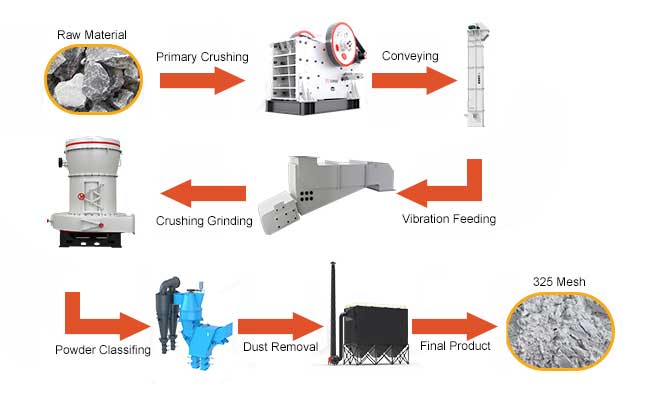
1. Crushing: Bulk talc ore is primarily crushed by a jaw crusher, reducing particle size to 15mm–50mm for subsequent processing.
2. Grinding: Crushed talc material is vertically conveyed to the feed hopper via a bucket elevator, then evenly and quantitatively fed into a Raymond mill by a vibrating feeder for fine grinding. The fineness of finished talc powder is fully adjustable at this stage.
3. Classification: The milled talc powder is classified by a powder classifier. Particles that fail to meet fineness standards are returned to the Raymond mill for regrinding.
4. Powder Collection: After sieving, qualified finished talcum powder is separated and collected in the dust collector through the pipeline device, and then uniformly packaged by a roller packing machine or just sent into the finished product hopper.
1. The grinding production line is designed reasonably, with good sealing throughout the entire grinding production process and minimal dust spillage.
2. The finished talc powder features a fine, uniform texture, with a sieving rate as high as 99% and extremely low impurity content.
3. Core accessories adopt high wear‑resistant materials, minimizing equipment failure rates and effectively lowering overall production costs.