
En
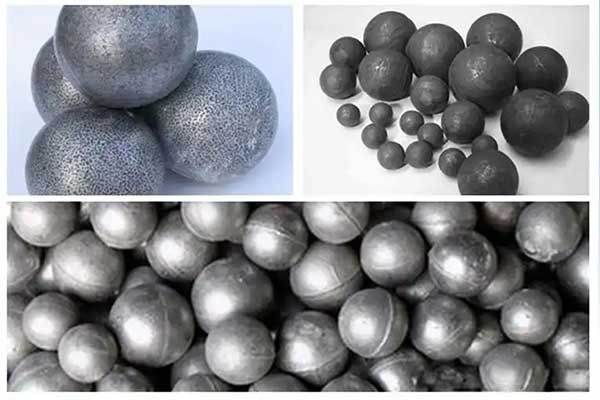
Steel balls are the most widely used grinding material in ball mills, mainly composed of elements such as carbon, manganese, silicon, and phosphorus. According to the different composition, they can be divided into:
High chromium alloy ball is a wear-resistant cast steel ball mainly made of high chromium alloy, with a chromium content of over 10%. High chromium alloy balls have high hardness and strong impact resistance, making them suitable for large-scale rough grinding operations, but long-term use may result in metal contamination.
Chromium content of 1% -3%. Outstanding cost-effectiveness, with a cost reduction of 20% -30% for higher chromium alloy balls, suitable for grinding ordinary hardness materials, but with lower wear resistance than high chromium steel.
Carbon tungsten based composite material, with much higher hardness and wear resistance than ordinary metals. It is commonly used for grinding superhard materials, but it is expensive and complex to process.
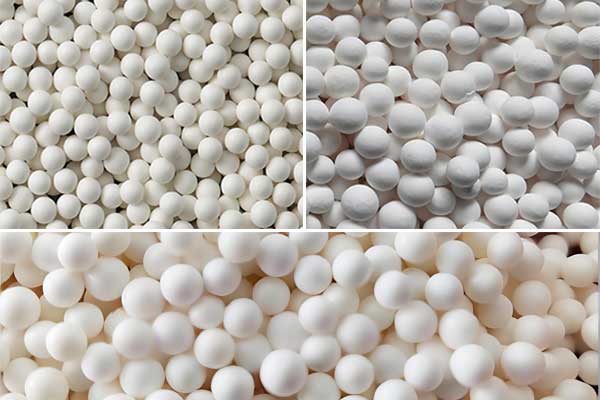
Ceramic balls are grinding media made from raw materials such as alumina and silica, using high-temperature sintering technology. They have the advantages of high hardness, good wear resistance, and low density. The use of ceramic balls in ball mills is suitable for grinding materials that require high particle size control and are prone to contamination.
The main disadvantages of ceramic balls are high price, insufficient toughness, and susceptibility to small cracks. According to different materials, it can be divided into:
Under high-speed grinding conditions, the wear rate is reduced by 40% compared to steel balls, the Vickers hardness is>1200kg/mm ², and the elastic modulus reaches 200GPa.
Zirconia has good chemical stability and almost no introduction of metal pollution, so it is widely used in fields such as ceramics, pigments, and electronic ceramics that require high purity. Although the cost of this type of medium is relatively high, its service life is long, and overall it is still an economically viable choice.
Alumina balls have an alumina content of over 90% and are a common ceramic grinding medium. It is divided into two categories: high aluminum and ordinary aluminum. Its hardness is slightly lower than zirconia, but still much higher than many natural materials, and it has good corrosion resistance. It is mainly used in the fine processing of hard materials in industries such as ceramics, glass, and chemical engineering, and is the preferred grinding medium for many small and medium-sized production enterprises.
Due to their special process, the internal structure of zirconium silicate balls is uniform and dense, always ensuring the quality of the grinding material is uniform and consistent. Zirconium silicate balls have good toughness, impact resistance, and extremely low friction coefficient. They have low wear on ball mills. Strong adaptability to materials, especially suitable for ultrafine grinding of titanium dioxide and kaolin.
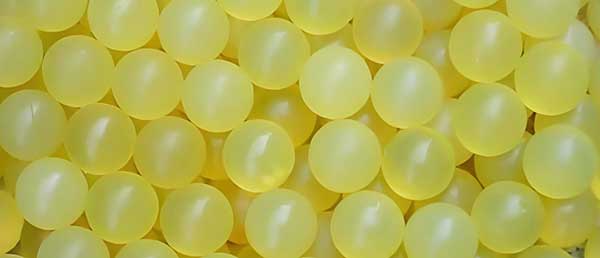
Polyurethane balls are usually made of a metal core and an outer layer of polyurethane, which can cushion impact through elastic deformation. Suitable for grinding soft materials.
The lowest cost and environmentally friendly, only suitable for specific low hardness material grinding scenarios.
Glass ball is a low-cost grinding medium mainly used in some occasions where grinding strength and product purity are not high requirements, such as preliminary dispersion and mixing in industries such as coatings, dyes, pesticides, etc. The wear resistance and impact resistance of glass balls are relatively limited, and they are not suitable for long-term or high-intensity grinding operations.
Such as agate balls, silicon balls, etc., are not easily contaminated during the grinding process and are commonly used in the processing of industries such as food and medicine.
In some traditional or specific crafts, natural sand and stones such as flint and pebbles are also used. This type of material has low cost and is easy to obtain, but its hardness, uniformity, and wear resistance are usually not as good as artificial media. Currently, its application scope has gradually narrowed and it is more common in some small or special production scenarios.
Plastic grinding media are mainly used in situations where they are extremely sensitive to metal contamination or require low-temperature grinding. Although its hardness and wear resistance are much lower than metal or ceramic media, it has good chemical inertness and buffering properties, making it suitable for mild grinding of certain special materials such as drugs, food additives, or high value-added chemicals.