
En
Since the continuous ball mill designed and manufactured by the Italian ICF company for the ceramic industry in the 19th century, ball mills have been used in mining production for over 100 years and are a common equipment in mining grinding processes.
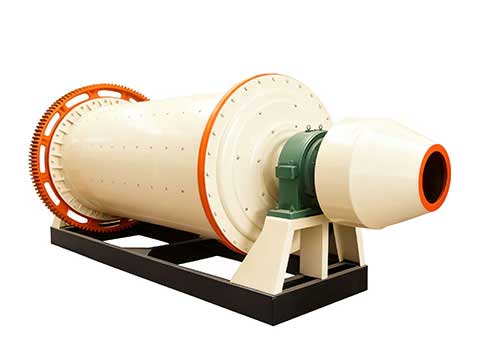
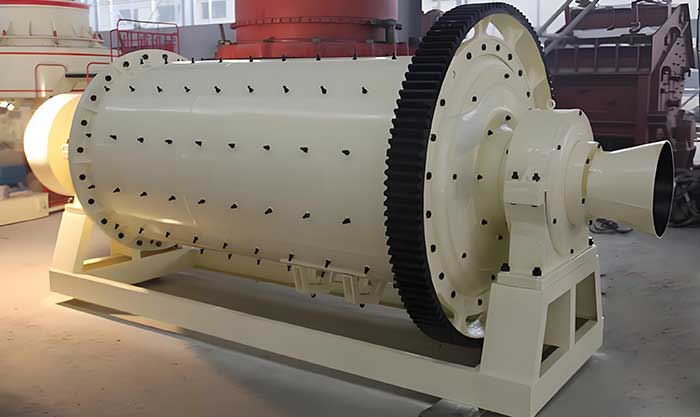
The ball mill mainly consists of a cylinder, feed end, discharge end, main bearing, and transmission system. Its working principle is that when the cylinder rotates around its central axis, the steel balls and material inside it rise to a certain height under the action of centrifugal force and friction, and then fall or are thrown off. Under the impact and grinding action, the ore is ground into fine particles.
In recent years, aiming at energy-saving and consumption reduction, significant advancements have been made in transmission methods, liners, grinding media materials, and mill structure based on the ball mill’s working principle. Ball mills now exhibit characteristics of large size, high efficiency, and energy-saving.
Metal Ore: two-stage fine grinding of copper and gold ore (P80 ≤ 75 μ m);
Non Metallic Minerals: Processing of cement clinker and ultrafine quartz sand powder (-325 mesh);
Restriction Condition: When the mud content is greater than 10%, it is prone to “burning and grinding”.
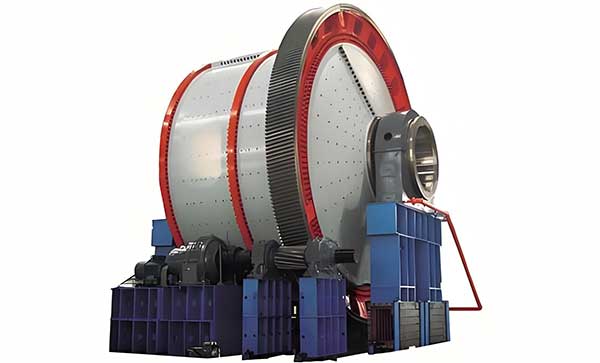
The autogenous (semi-autogenous) mill grushes ore of different sizes using a similar operation principle to the ball mill. When the cylinder rotates, the effective crushing of the ore relies on collisions, impacts, and friction between the ore particles. A grate screen is installed at the discharge end for classification, making it a grinding equipment with both crushing and grinding functions.
The biggest difference from ball mills and rod mills is that it uses the material itself or a small amount of added media to crush the ore. Its power source comes from asynchronous or synchronous motors, which can be driven through bilateral transmission, unilateral transmission, or directly by a motor at the cylinder end. Compared to ball mills, it offers advantages such as lower investment, shorter construction period, simpler process flow, lower cost, and higher crushing ratio.
Large Iron Ore: Processing 200-300mm raw ore, replacing the medium and fine crushing process;
Arid Regions: no need for external media supply (such as Australian iron ore);
Caution: Uneven hardness of ore.
Reference Reading: AG Mill vs SAG Mill | How to Choose the Right One
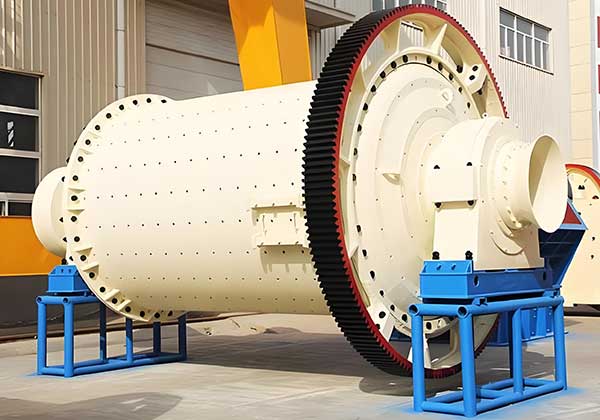
The rod mill was developed based on the ball mill but operates differently. During operation, since the rods are in line contact, it not only has a selective grinding effect, producing a more uniform product size with less over-crushing, but also offers advantages such as large processing capacity, reliable technology, and fewer auxiliary equipment.
The rod mill’s rotational speed and filling rate are relatively low, and its feed size is strictly controlled, usually around 25-30 mm. If the particle size is too large, it can cause the steel rods to tilt, leading to bending or breaking of the steel plates. Additionally, larger gaps between the rods will reduce grinding efficiency.
Compared to ball mills, rod mills have a smaller range of applications. In mining production, ball mills can generally replace rod mills, so the actual number of rod mills in use and their output are less than that of ball mills.
Tungsten/Tin Ore: protect mineral crystals during the coarse grinding stage (over crushing rate<5%);
Building Materials: Limestone sand making (discharging 3-5mm for concrete aggregates);
Advantage Scenario: Dry/wet coarse grinding with narrow particle size distribution is required.
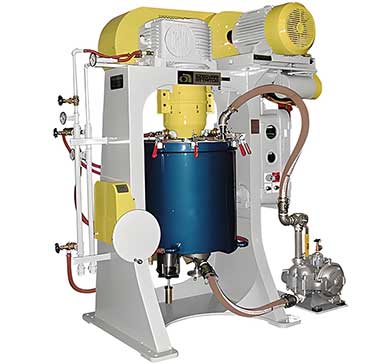
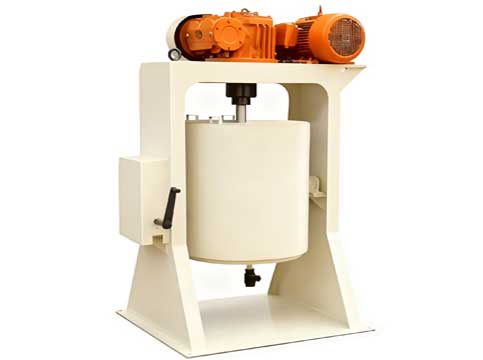
The stirred mill is a grinding equipment where the cylinder remains stationary, and an internal stirring device drives the grinding media to move, thereby subjecting the ore to significant impact, shear, and friction forces to crush it. Its grinding efficiency for finer materials is higher than that of ball mills, and its investment cost, energy consumption, and noise are also lower than those of ball mills.
After decades of development, stirred mills have become widely used equipment for fine and ultra-fine grinding, mainly used in the production of sub-micron powders, slurries, nano coatings, and new material development. In the mining industry, they are primarily used for regrinding operations in mineral processing.
Wet Fine Grinding: regrinding of gold and silver ores, copper ores, and lead-zinc ores; Calcium carbonate, kaolin, mica, graphite, coal, fine or ultrafine grinding;
Dry Fine Grinding: non-metallic minerals and chemical raw materials such as calcium carbonate, mica, lightly burned magnesium powder, barite, slag, etc.
Reference Reading: Stirring Mill Applications In Mineral Processing