
En
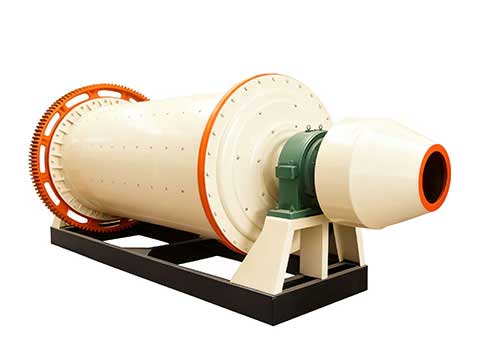
Ball mill plays a crucial role in cement production and is one of the indispensable equipment in the cement manufacturing process. The main function of a ball mill is to grind raw materials (such as limestone, clay, etc.) into fine powder, which is the first step in producing cement. The grinding process is crucial for improving the quality and performance of cement, as fine powder is more likely to react during subsequent heating processes.
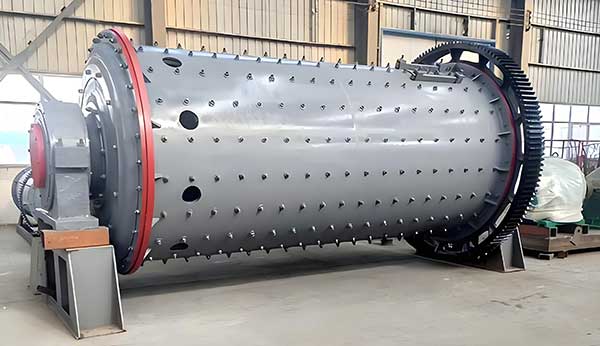
In ball mill, raw materials are mixed with the grinding ball under the action of rotation, ensuring uniform mixing of the raw materials. This uniform mixing is necessary for producing high-quality cement because it can reduce the differences in raw material composition and make the performance of cement more stable.
Ball mill can process various raw materials and produce different types of cement, such as Portland cement, limestone cement, etc. This adaptability makes ball mill a very flexible and multifunctional equipment in cement enterprises.
1. Standard Cement Ball Mill: Standard cement ball mills are mostly used in closed-circuit grinding systems, characterized by high grinding efficiency, large mill output, and low power consumption.
Especially when grinding slag cement, their performance is more prominent. Generally, the output of a grinding machine can be increased by 15-20%, and the power consumption can be reduced by about 10%.
In addition, the temperature of the finished product can be reduced by 20-40 ℃, and the fineness of the product is also easy to adjust.
2. High-Fineness & High-Yield Cement Ball Mill: High-fineness & high-yield cement ball mills are mainly used in open-circuit grinding systems. Its characteristics are simple system equipment and process flow, low investment, and small factory floor area.
Advanced internal selection powder special compartment device is adopted in the structure of the grinder, and activation device is added to the fine grinding compartment.
There is a dedicated discharge grate plate at the grinding tail, which minimizes the size of the grinding medium in the grinding compartment, greatly improves the grinding efficiency, and achieves the goal of high output and low energy consumption.
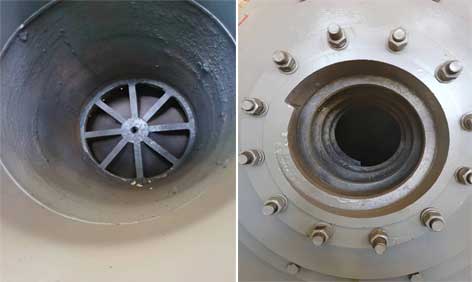
3. Grid Ball Mill: A grid ball mill is equipped with a grid plate at the discharge end, which has multiple small holes that can quickly discharge the finely ground slurry. The design of the grid plate allows the slurry inside the mill to be quickly discharged, reducing the phenomenon of over grinding and improving the grinding efficiency.
Grid ball mills suitable for rough and initial grinding operations, especially for ore processing that requires efficient discharge.
4. Overflow Ball Mill: The overflow ball mill does not have grid plates, and the discharge end is open. The slurry is discharged through overflow. The slurry is naturally discharged through the overflow port of the mill, and the discharge speed is relatively slow. Due to the longer residence time of the slurry in the mill, the grinding process is more uniform and suitable for fine and ultrafine grinding.
Reference Reading: Grid Ball Mill VS Overflow Ball Mill