
En
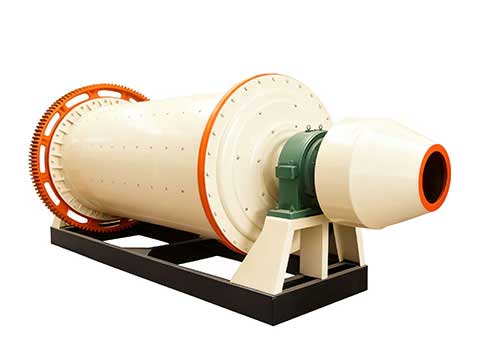
Ball mill installation procedure is a systematic project that requires strict adherence to steps and specifications to ensure the stability and safety of equipment operation.
The entire process of installing a ball mill can be divided into 6 steps: pre installation preparation, foundation construction, component installation, cylinder installation, transmission device installation, inspection and debugging.
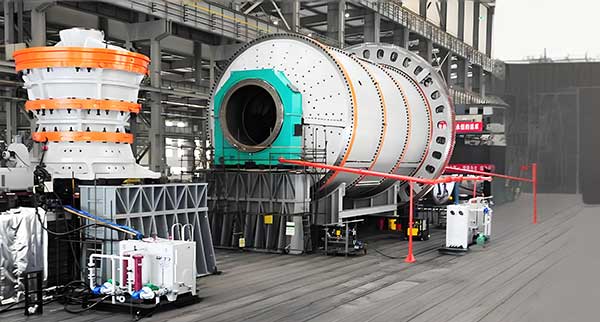
Before starting the installation, sufficient preparation work is required. This includes carefully reading the overall assembly drawing, foundation drawing, and assembly drawing of each component of the ball mill, clarifying installation requirements and technical standards.
And it is necessary to clean the installation site to ensure sufficient operating space and check whether all components are complete and intact.
Industrial ball mill must be installed on a sturdy and flat concrete foundation to ensure its long-term stable operation. The concrete foundation compressive strength needs to reach > 75% of the design requirements.
After the foundation construction is completed, precise marking work needs to be carried out. According to the ball mill plant layout diagram, draw the longitudinal and transverse centerlines of the ball mill machine on the foundation, and embed the center marking plate to ensure that the deviation of the centerline position and elevation is within the allowable range.
This is the key step in the installation process of a ball mill.
Firstly, set up shims on the foundation and determine the base position based on the size of the ball mill grinding body. The deviation of the cross centerline of the base from the center plate, elevation deviation, and levelness all need to be strictly controlled.
Then, lift the bearing seat onto the base and ensure it aligns with the base.
During installation procedure , it is necessary to carefully check the contact between the main bearing and the base, with uniform contact and a local gap usually not exceeding 1mm. For the cooling water channel of the main bearing, a water pressure test is also required to ensure no leakage.
The ball mill cylinder installation can only be carried out after aligning and firmly fixing the main bearing during installation. After hoisting the cylinder onto the main bearing, it is necessary to carefully check the elevation, coaxiality, and side clearance of the hollow shafts at both ends to ensure that they meet the design requirements.
Ensure that the shoulder clearance of the sliding end of the ball mill grinder meets the requirements specified in the drawing.
For edge driven ball mills, large gears need to be installed. The joint surface between the large gear and the cylinder flange should be tight, and the radial runout and end face circular runout of the large gear on the hollow shaft neck should meet the GB1184.
The longitudinal centerline of the transmission shaft should be kept parallel to the centerline of the cylinder body, and the horizontal and parallel deviations should also be controlled within the specified range.
For center drive ball mill, it is important to ensure the coaxiality between the output shaft of the main reducer and the transmission connection pipe.
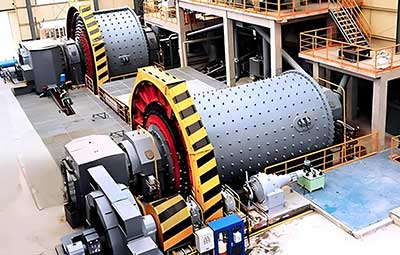
After ball mill installation, enter the debugging step. A series of checks need to be conducted before starting:
Safety and Cleanliness: Check if safety facilities are complete and remove debris around the grinder.
Tightening and Lubrication: Check whether the bolts of each assembly are securely fastened, and add sufficient lubricating oil to each lubrication part.
Empty Load Test: Run with no load, observe whether the ball mill runs smoothly, whether there is any abnormal noise or vibration, and the bearing temperature should be normal.
Load Test: After the no-load test is normal, add materials gradually for load test, observe the operation of the ball mill in real work, and continue to run for a period of time to verify its stability.
Warm Tip: Each step needs to be recorded in details throughout the ball mill installation process, and any issues should be promptly addressed. A professional ball mill installation team and strict quality control are the key to ensuring the successful installation of a ball mill.



 Download Ball Mill Installation Procedure PDF