
En
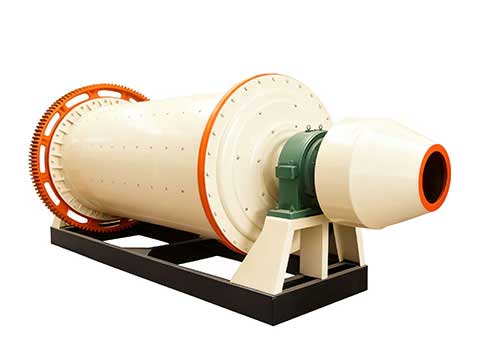
Autogenous mill (ag mill) uses the material itself as the grinding medium, without additional media such as steel balls or steel rods. It achieves crushing through the impact and friction between materials, so it is also known as a medium‑less mill. AG mill integrates crushing and grinding, and is widely used in conventional grinding operations.
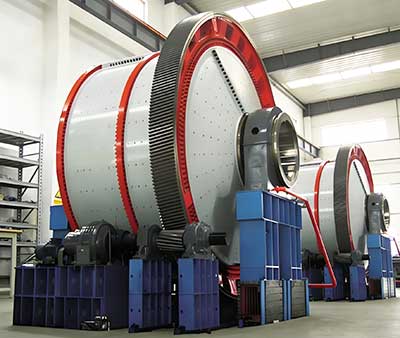
According to the grinding process, ag mills are divided into dry type (aerofall) and wet type (cascade). The wet type is the most commonly used at present.
According to the driving mode ag mills are divided into two types: variable speed and fixed speed.
Large autogenous mills (sag mills) are generally equipped with advanced technologies such as hydrostatic bearings, which greatly reduce starting resistance and ensure stable and reliable operation.
Autogenous mills are more suitable for uniform, hard, low-clay ores, such as some iron ores and gold ores.
A semi‑autogenous mill (sag mill) is developed on the basis of an autogenous mill (sag mill), with a small amount of grinding media (such as steel balls or steel rods) added. This solves the problem of difficult grinding and low efficiency for some fine‑grained materials, and significantly improves grinding performance.
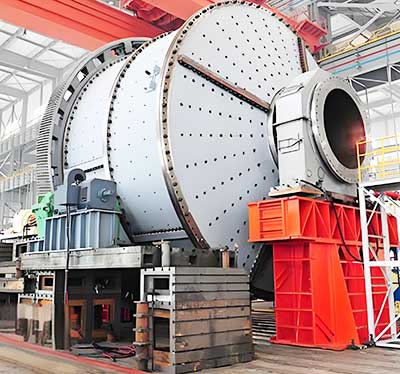
According to material handling methods, sag mills are divided into dry semi‑autogenous mill and wet semi‑autogenous mill.
Wet semi autogenous mills are more commonly used and can be used in open‑circuit or closed‑circuit grinding systems to meet various dry or wet grinding requirements.
Semi-autogenous mills are more versatile, especially suitable for wet, sticky, high-clay or unevenly sized ores. They can eliminate ore washing and secondary crushing stages, reducing process complexity.
Autogenous mills can accept run‑of‑mine or coarsely crushed ore directly, but the particle size distribution must be properly controlled.
Semi‑autogenous mills require the ore to be crushed to a specified size range before feeding.
Autogenous mills have a reduction ratio of up to 4000–5000 and can grind material down to 0.074 mm in one stage, which is much higher than that of semi‑autogenous mills. However, they are prone to over‑crushing.
By adding grinding media, semi‑autogenous mills increase capacity by 10%–30%, effectively prevent over‑crushing, and produce a coarser, more uniform product.
Autogenous mills use the material itself as the grinding medium, achieving both crushing and grinding via inter‑particle impact.
Semi‑autogenous mills use added media such as steel balls, grinding through impact between media and material, and between particles. They feature higher throughput, higher grinding efficiency, and lower operating costs.
Some autogenous mills may add a small amount of media, generally limited to about 3%.
Semi‑autogenous mills have a typical media filling rate of 8%–12%, up to about 15%, resulting in faster liner wear – approximately 15% higher than autogenous mills.
Semi-autogenous mills are usually equipped with grate plates and pebble ports (for discharging large pebbles).
Autogenous mills, if no steel balls are added, may have no discharge device or only a simple one.
Since semi-autogenous mills are charged with steel balls (filling rate 8%–15%), their liners have higher lifter bars (generally 150–300 mm) and greater thickness (60–100 mm) to withstand higher impacts.
The liners of autogenous mills focus more on guiding the self-impact of materials, with lower lifter bars.
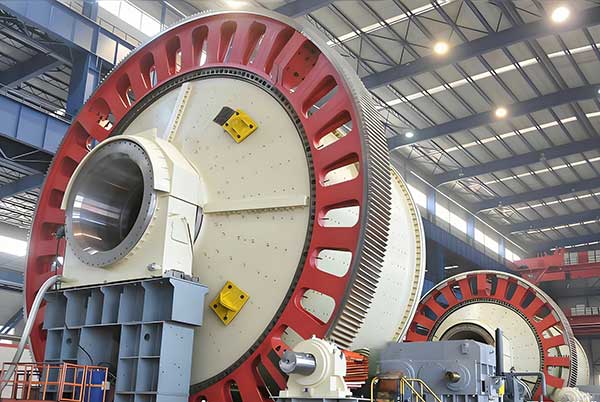
If the ore is uniform and friable, and the run‑of‑mine ore can be fed directly into grinding, an autogenous mill can be considered to reduce steel consumption.
For ores with uneven hardness or high content of hard pebbles, or where high throughput or fine grinding (e.g., −200 mesh >70%) is required, a semi‑autogenous mill is recommended. Steel balls can effectively crush hard pebbles of 20–80 mm.