
En
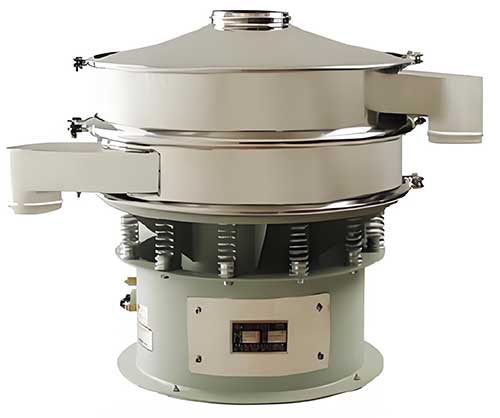
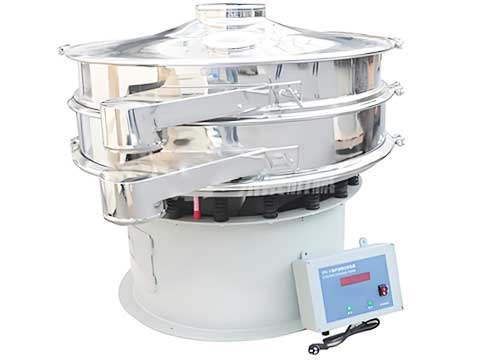
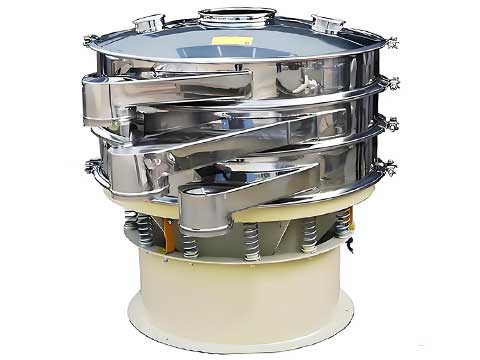
Rotary vibrating screen can be used for single-layer impurity removal, multi-layer classification, and solid-liquid separation filtration. The screen has 1-5 layers and can simultaneously perform 2-6 levels of sorting and filtration. It has high screening accuracy and is suitable for a wide range of materials.
① Rotary vibrating screen can be divided into 3 types based on materials:
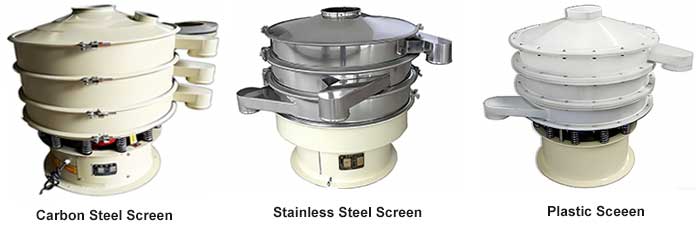
Carbon steel rotary vibrating screen is one of the most common rotary vibrating screens, suitable for screening scenarios with low material requirements, and suitable for screening operations of building powder particles. The style can be designed according to the actual situation on site.
Parts in contact with materials are made of stainless steel to avoid contamination, especially for the food industry, white plastic granules, etc. Full stainless steel construction is used for highly demanding working environments.
It is mainly designed to prevent chemical reactions and strong corrosion caused by contact between special materials and metal. All parts in contact with materials — including screen frame, screen mesh, middle frame, sealing cover and mesh cleaning device — are non-metallic. It is widely used for dry powder or slurry screening in chemical, military and special industries.
② Rotary vibrating screens can be divided into 4 types according to different process requirements:
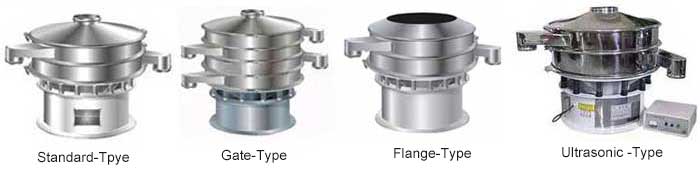
Mainly used for general powder and small-particle materials. Simple structure and easy operation.
Gate-type rotary vibrating screen is a product derived from practical applications, which is equipped with a gate to control the residence and screening time of materials on the screen, ensuring screening accuracy and processing capacity.
Gate-type rotary vibrating screen is commonly used for screening ultra light and ultrafine materials, such as Chinese medicine powder, starch, etc. Users can perform long-term screening operations with one feeding, and achieve good screening by controlling the opening and closing of the gate.
Flange-type rotary vibrating screen is based on the ordinary rotary vibrating screen, with an increased feeding port to support large feeding operations, and the output can be increased by 3-5 times.
Flange-type rotary vibrating screen is designed with a special angle to prevent liquid splashing, and has a wide range of applications in industries such as paint, water filtration, and pulp filtration.
Based on a conventional rotary vibrating screen with an additional low-amplitude, high-frequency ultrasonic vibration system. It effectively solves screen clogging and improves screening pass rate by 50–400%, ideal for fine and ultra-fine materials.