
En
Jigs and shaking tables are mainstream gravity separation equipment with wide application ranges, yet they differ considerably in throughput, recovery rate and feed particle size. A detailed comparison is listed below.
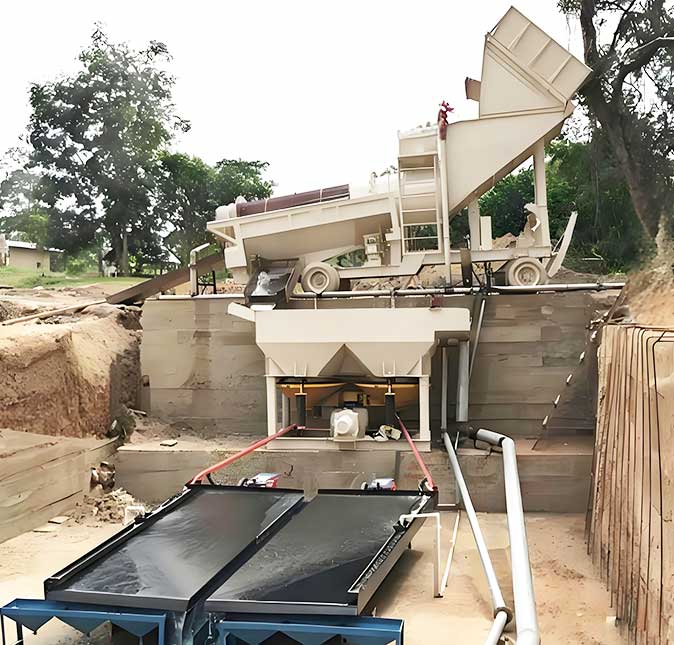
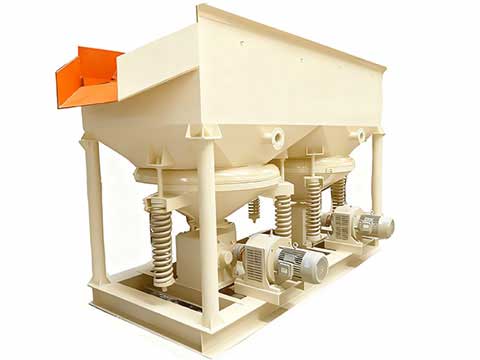
Jig machines separate minerals by specific gravity stratification with water as medium and feature high single-unit capacity. Small diaphragm jigs deliver 2~6 t/h, while large industrial jigs normally reach 40 t/h and can hit 60~80 t/h for alluvial gold processing.
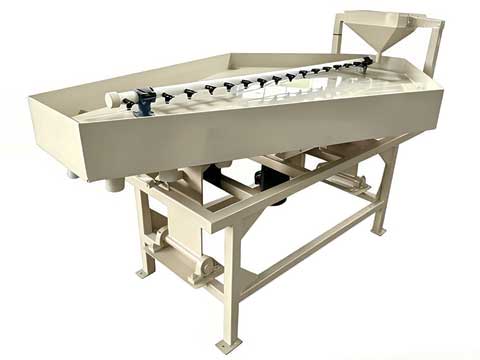
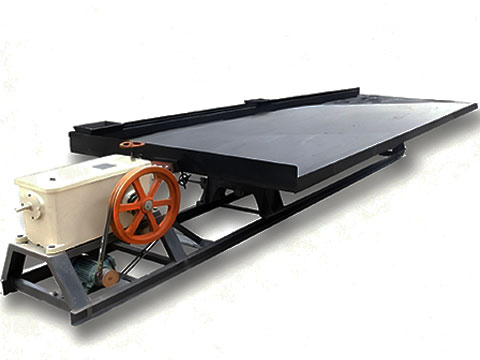
Designed for fine particle concentration, shaking tables have low capacity. A single-deck 6S shaking table runs at 0.8~2.5 t/h, and Gemini shaking table only reaches 2~3 t/h, much lower than jigs with identical floor space.
Jig machines are mainly applied for rough concentration and tailings rejection, also available for rough concentrate pre-separation. Its alluvial gold recovery exceeds 92%, and sawtooth-wave jigs achieve up to 97% in concentration for coarse grains.
Shaking tables serve as precise concentration equipment and are rarely used for rough separation. Properly optimized, fine alluvial gold recovery via shaking tables ranges from 92% to 96% (higher than jigs), while roughly operated ones stay around 90%. In short, jigs excel in rough separation recovery whereas shaking tables perform better on fine-grain concentration.
Jigs and shaking tables process hematite, limonite, manganese ore, antimony ore, alluvial gold, alluvial tin, barite, fluorite and other metallic & non-metallic minerals.
Jig machines suit coarse, medium and ordinary fine ores but perform poorly on ultra-fine fractions below 0.04 mm. Shaking tables specialize in fine and ultra-fine materials of 0.037~2 mm with unsatisfactory performance on coarse lump ore.
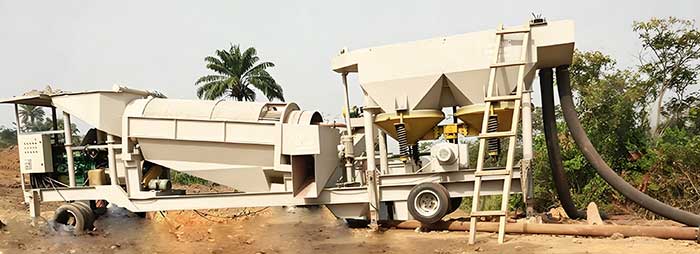
Combined gravity separation of jigs and shaking tables effectively upgrades concentrate grade. For alluvial tin ore with raw grade of 0.3%~0.5%, jigs remove slime and conduct rough separation to lift grade to 8%~10%; subsequent shaking table concentration raises final concentrate grade to 45%~55%.